
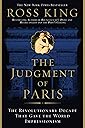
The Judgment of Paris: The Revolutionary Decade That Gave the World Impressionism
Product ID: 4145319
The Judgment of Paris: The Revolutionary Decade That Gave the World Impressionism [King, Ross] on desertcart.com. *FREE* shipping on qualifying offers. The Judgment of Paris: The Revolutionary Decade That Gave the World Impressionism Review: Informative but also as gripping as a thriller - Not about the Greek myth—take this book’s title literally. In the mid-1800s, Ernest Meissonier followed the rules of the French Academie des Beaux Arts and was revered as an artist, while Edouard Manet defied them—employing freer techniques and painting life as he saw it being lived—and was reviled. Such was the judgement of Paris. Manet’s paintings Olympia and Le Dejeuner Sur L’herbe caused scandals that attracted big crowds of oglers, to mock, get titillated, or simply to satisfy their curiosity. And his paintings didn’t sell. Meissonier got rich and Manet, who luckily came from a wealthy family, would have starved had he depended on his art. But we don’t often recognize great talent, or we fear disturbing the status quo. And time and other climes await their opportunity to express their judgement. Manet was not isolated in his unfortunate notoriety. He attracted young artists who embraced the message in his paintings and branded themselves impressionists. Manet unintentionally ushered in a revolution in art and left a cultural legacy: “by recasting artistic tradition in his own idiosyncratic vision in order to forge entirely new forms.” The impressionists didn’t impress French critics and their public. But they persisted. With help from gallery owner Durand-Ruel, they took their art to fresh eyes and fresh viewpoints across the ocean in London and New York. And the rest, you could say, is history. By the early 1900s, the fortunes of these artists began to reverse. Now Manet is famous and regarded as the father of modern painting. And his Olympia—mocked for a long time—is credited by an art professor at the Sorbonne as marking “a momentous date in the history of nineteenth-century painting and art generally.” His paintings have sold for millions of dollars. But how many of us in this new millennium know the works of Meissonier? While famous during his lifetime, the valuation of his work plunged after his death, and in at least one art history book he “had vanished from the history of French art like a murdered enemy.” Ross King’s book is doubtless an informative read. But it’s also as gripping as a thriller. He presents this period of art history in the sort of vivid narratives we’re advised to use in fiction. He draws us into his history of art as if we’re in the time and place when events happen. Review: A nuanced account of the birth and rise of impressionism. - The Paris Salon was the ultimate tribunal where French Art was judged during the 1800's. Thousands of artists submitted paintings, sculptures and other forms of art every year in hopes of being accepted.Being chosen or not could break or make an artists' career quite literally. Over the decades, the tribunal that selected the works had become a self-perpetuating institution with sclerotized ideas of what constituted Art- both in regards to content ( mostly mythological, classical or historical grand scenes with some sort of moral) and style (no trace of brush strokes and soft chiaroscuro transitions). In 1863, driven by the outrage that resulted from the rules imposed by the Count of Nieuekerke and which resulted in controversial refusals, Napoleon III ordered the opening of the Salon des Refuses: an exhibition that was to display many of the works refused by the official Salon. Napoleon III knew how to distract the population from his dictatorial government after all. This book follows the fortunes of two painters that were deeply involved in the Salon controversy: Meissionier, a very succesful painter of excruciating detail and accuracy; and Manet, a representative of a more direct and modern style. In a very accessible style that flows quite well, the book delves into the state of French Art of the nineteenth century. The panorama that emerges is a lot more nuanced than what we normally understand by the rivalry between impressionism and classicism, the mere confrontation between the "new" and the "old" which ends in 1874 with the Impressionists Exhibition. The author reveals that Manet, for example, used very classical models (Titian, Tintoretto) for his first paintings. Also, Manet valued the Salon and kept presenting his paintings to be juried year after year, even after becoming the hero of many an impressionist. Meissioner on the other hand struggled to create a modern vision as well despite the fact that his enormous success stemmed from his anachronistic and greatly detailed canvases of a somewhat dutch inspiration. The cast of characters that surrounds these two masters is the subject of much literature: Courbet, Baudelaire, Whistler, Monet, Zola, Fantin-laTour, Ingres, Degas, Bougereau and the "pompier" painters, an endless row of royals, politcians, gallerists and collectors. "The Judgment of Paris" does a phenomenal job of integrating all these pieces in a coherent narrative. I particularly enjoyed the glimpses into the lives of the painters, how young some of them were when they created some of their work, how poor or rich or inbetween some were, how they debated with their own place in time and art. I thought it was fascinating and far form the "finished" product and portrait of self-determination most biographers produce. For anybody interested in art and history, the book is well documented and seamless. Not just a collection of facts in search of a story but a good narration.If you are a painter, this is a must read and the only thing you will regret is the time you won't be painting waiting to put it down.
| Best Sellers Rank | #111,127 in Books ( See Top 100 in Books ) #32 in Art Movements (Books) #95 in French History (Books) #99 in Art History (Books) |
| Customer Reviews | 4.5 4.5 out of 5 stars (434) |
| Dimensions | 6.15 x 1.2 x 9.15 inches |
| ISBN-10 | 0802715168 |
| ISBN-13 | 978-0802715166 |
| Item Weight | 1.15 pounds |
| Language | English |
| Print length | 464 pages |
| Publication date | January 3, 2007 |
| Publisher | Bloomsbury USA |
E**Y
Informative but also as gripping as a thriller
Not about the Greek myth—take this book’s title literally. In the mid-1800s, Ernest Meissonier followed the rules of the French Academie des Beaux Arts and was revered as an artist, while Edouard Manet defied them—employing freer techniques and painting life as he saw it being lived—and was reviled. Such was the judgement of Paris. Manet’s paintings Olympia and Le Dejeuner Sur L’herbe caused scandals that attracted big crowds of oglers, to mock, get titillated, or simply to satisfy their curiosity. And his paintings didn’t sell. Meissonier got rich and Manet, who luckily came from a wealthy family, would have starved had he depended on his art. But we don’t often recognize great talent, or we fear disturbing the status quo. And time and other climes await their opportunity to express their judgement. Manet was not isolated in his unfortunate notoriety. He attracted young artists who embraced the message in his paintings and branded themselves impressionists. Manet unintentionally ushered in a revolution in art and left a cultural legacy: “by recasting artistic tradition in his own idiosyncratic vision in order to forge entirely new forms.” The impressionists didn’t impress French critics and their public. But they persisted. With help from gallery owner Durand-Ruel, they took their art to fresh eyes and fresh viewpoints across the ocean in London and New York. And the rest, you could say, is history. By the early 1900s, the fortunes of these artists began to reverse. Now Manet is famous and regarded as the father of modern painting. And his Olympia—mocked for a long time—is credited by an art professor at the Sorbonne as marking “a momentous date in the history of nineteenth-century painting and art generally.” His paintings have sold for millions of dollars. But how many of us in this new millennium know the works of Meissonier? While famous during his lifetime, the valuation of his work plunged after his death, and in at least one art history book he “had vanished from the history of French art like a murdered enemy.” Ross King’s book is doubtless an informative read. But it’s also as gripping as a thriller. He presents this period of art history in the sort of vivid narratives we’re advised to use in fiction. He draws us into his history of art as if we’re in the time and place when events happen.
J**N
A nuanced account of the birth and rise of impressionism.
The Paris Salon was the ultimate tribunal where French Art was judged during the 1800's. Thousands of artists submitted paintings, sculptures and other forms of art every year in hopes of being accepted.Being chosen or not could break or make an artists' career quite literally. Over the decades, the tribunal that selected the works had become a self-perpetuating institution with sclerotized ideas of what constituted Art- both in regards to content ( mostly mythological, classical or historical grand scenes with some sort of moral) and style (no trace of brush strokes and soft chiaroscuro transitions). In 1863, driven by the outrage that resulted from the rules imposed by the Count of Nieuekerke and which resulted in controversial refusals, Napoleon III ordered the opening of the Salon des Refuses: an exhibition that was to display many of the works refused by the official Salon. Napoleon III knew how to distract the population from his dictatorial government after all. This book follows the fortunes of two painters that were deeply involved in the Salon controversy: Meissionier, a very succesful painter of excruciating detail and accuracy; and Manet, a representative of a more direct and modern style. In a very accessible style that flows quite well, the book delves into the state of French Art of the nineteenth century. The panorama that emerges is a lot more nuanced than what we normally understand by the rivalry between impressionism and classicism, the mere confrontation between the "new" and the "old" which ends in 1874 with the Impressionists Exhibition. The author reveals that Manet, for example, used very classical models (Titian, Tintoretto) for his first paintings. Also, Manet valued the Salon and kept presenting his paintings to be juried year after year, even after becoming the hero of many an impressionist. Meissioner on the other hand struggled to create a modern vision as well despite the fact that his enormous success stemmed from his anachronistic and greatly detailed canvases of a somewhat dutch inspiration. The cast of characters that surrounds these two masters is the subject of much literature: Courbet, Baudelaire, Whistler, Monet, Zola, Fantin-laTour, Ingres, Degas, Bougereau and the "pompier" painters, an endless row of royals, politcians, gallerists and collectors. "The Judgment of Paris" does a phenomenal job of integrating all these pieces in a coherent narrative. I particularly enjoyed the glimpses into the lives of the painters, how young some of them were when they created some of their work, how poor or rich or inbetween some were, how they debated with their own place in time and art. I thought it was fascinating and far form the "finished" product and portrait of self-determination most biographers produce. For anybody interested in art and history, the book is well documented and seamless. Not just a collection of facts in search of a story but a good narration.If you are a painter, this is a must read and the only thing you will regret is the time you won't be painting waiting to put it down.
G**R
What the heck is a "Due"?????
I'm a fan of Ross King, and liked this book very much. But one detail bothered me, as a ex-copy editor. The Duc de Morny is referred to THROUGHOUT as "Due de Morny". (I'm referring to the Kindle edition). To the best of my knowledge there is no such rank as a "Due." Otherwise well done.
L**R
Good!
D**R
Good Price
F**T
The book's title is a neat, if rather obvious, pun. Its subtitle is a little misleading, however, for although King does indeed focus on the years 1863 to 1873 - a decade during which what would later be called 'Impressionism' began to emerge - he tells his story chiefly by reference to just two contrasting figures of the French art world. Edouard Manet is of course still celebrated, but the other figure, Ernest Meissonier, is now all but unknown despite having reigned supreme in the second half of the nineteenth century. King paints his own canvas extremely well, filling in not only biographical details but conjuring the lost world of those times. By ignoring the oft-told but misleading tales about the origins of Impressionism and by concentrating meticulously on detail and on unravelling the complexity and contradictions of the period, King makes the story real and accessible. The principals are not ciphers but flesh and blood human beings. His prose never falters. His research is deep and he uses it to terrific effect. There is much in here that was utterly new to me and his descriptions of key artworks added enormously to my understanding and enjoyment of them. I wish I could praise his paperback publisher as heartily. Pimlico has produced a volume that does no justice at all to the magnificence of King's text. Words are squashed onto the page at a font size that will severely test anyone's eyesight; the paper on my copy is already yellowing; and the so-called 'plates' in the centre of the book are quite the worst reproductions of art that I have seen in a very long time, being badly printed and in monochrome only. Even the cover is a kitsch and unappealing mess. Shame on them.
R**N
I have just finished reading this amazing book which is full of detailed information and history of the time of the emergence of the Impressionists. I would recommend this book to anyone who is interested in painting and who thinks they know all they need to know about this time in the history of art. It's an exhilarating read which I could not put down. Well done Ross King! I have read King's 'Brunelleschi's Dome' and 'Michaelangelo and the Pope's Ceiling' both brilliant books which I have bought for friends to enjoy as I have. I would thoroughly recommend 'The Judgement Of Paris' as once it's finished you will miss it. Ross King thank you for introducing me to Meissonier who was completely wiped out of my art education.
C**T
This book is chock full of events and descriptions detailing the early lives of the artists and how the impressionist movement became such an important part of history.
Trustpilot
2 weeks ago
2 weeks ago