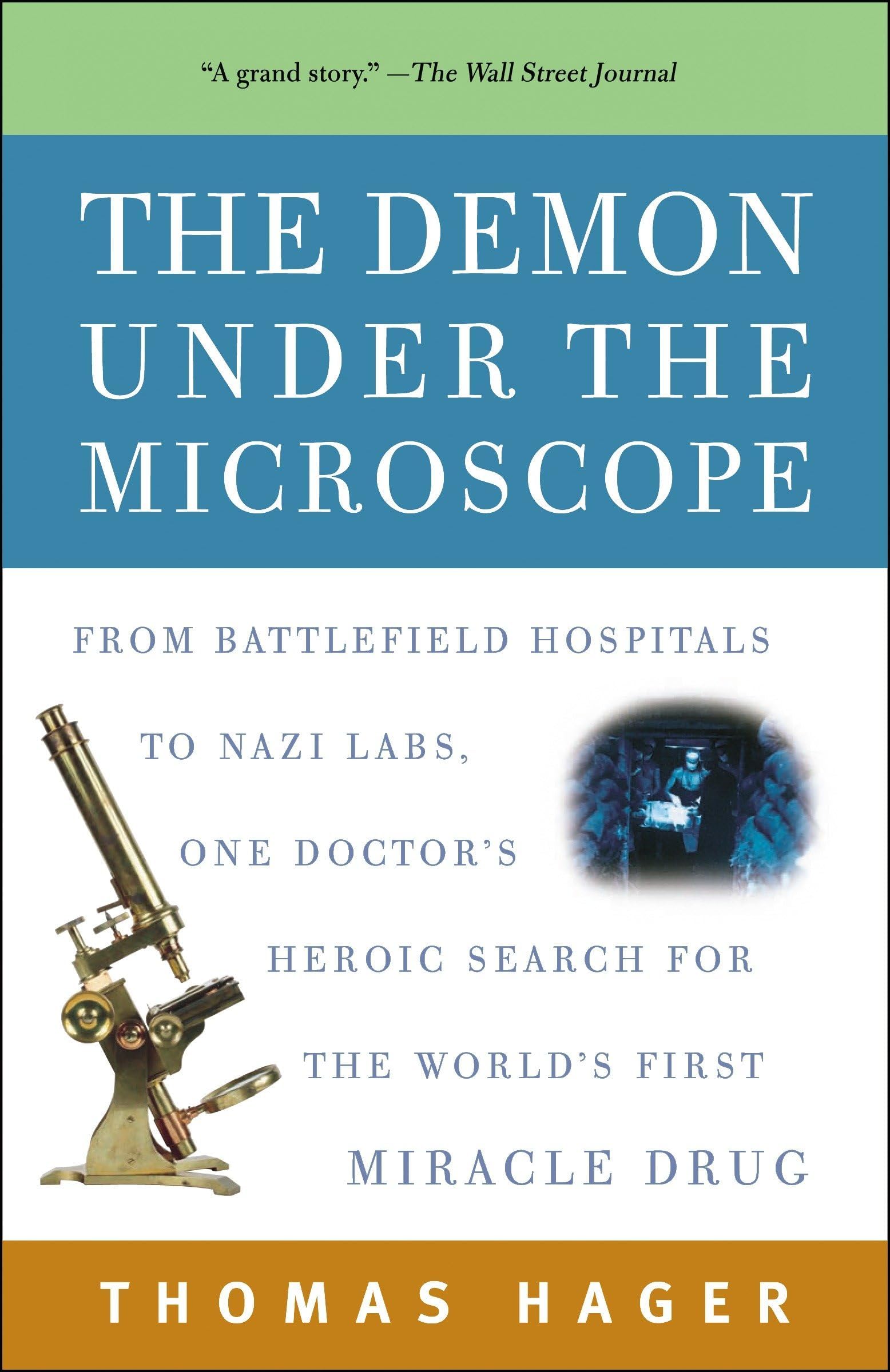
The Demon Under the Microscope: From Battlefield Hospitals to Nazi Labs, One Doctor's Heroic Search for the World's First Miracle Drug
Product ID: 15005641
Buy anything from 5,000+ international stores. One checkout price. No surprise fees. Join 2M+ shoppers on Desertcart.
Desertcart purchases this item on your behalf and handles shipping, customs, and support to Botswana.
In The Demon Under the Microscope , Thomas Hager chronicles the dramatic history of sulfa, the first antibiotic and the drug that shaped modern medicine. The Nazis discovered it. The Allies won the war with it. It conquered diseases, changed laws, and single-handedly launched the era of antibiotics. Sulfa saved millions of lives—among them those of Winston Churchill and Franklin Delano Roosevelt Jr.—but its real effects are even more far reaching. Sulfa changed the way new drugs were developed, approved, and sold; transformed the way doctors treated patients; and ushered in the era of modern medicine. The very concept that chemicals created in a lab could cure disease revolutionized medicine, taking it from the treatment of symptoms and discomfort to the eradication of the root cause of illness. A strange and colorful story, The Demon Under the Microscope illuminates the vivid characters, corporate strategy, individual idealism, careful planning, lucky breaks, cynicism, heroism, greed, hard work, and the central (though mistaken) idea that brought sulfa to the world. This is a fascinating scientific tale with all the excitement and intrigue of a great suspense novel. Review: Engaging biography of sulfa drug researcher and historical context and impacts - This book gave a historical account of the impacts and treatment of infectious disease and the rolls of physicians, pharmacists, chemical companies, individual scientists, government regulations, consumers, colonialism, and two world wars before, during, and after the discovery of the antibiotic properties of sulfa drugs. This book is part biography of the Nobel Prize winning German research scientist who tested hundreds of dye-based chemicals on thousands of infected research animals, as well as in vitro on various pathogenic bacteria. The author provides background on the state of infectious disease in hospitals, among general populations, in colonial wars, and during WWI and II and the research and treatment trends at the time. He also notes the lack of standardized large-scale, double-blind human drug trials and points out how haphazard and, by today's standards, unethical testing occurred on African citizens, institutionalized mental health patients, orphans and prisoners, military personnel, and uninformed patients. There were also unethical forced mutilations, infections, and treatments conducted in Nazi concentration camps. Some prisoners were forced to work as slave labourers at the chemical companies, as well. The author goes on the explore the barely-regulated US pharmaceutical environment of snake-oil remedies marketed directly to consumers, who diagnosed themselves or consulted druggists and bought whatever they wanted for self-medication. The proliferation of sulfa-based remedies from less reliable chemical companies led to multiple deaths and finally led to federal laws updating and strengthening the regulatory power of the FDA. This is a highly relevant story in this age of government deregulation. Review: excellent account of an important medical discovery - This book tells the story of the discovery, in the late 1930s, of the sulfanilamide (“sulfa”) drugs, the first drugs effective against infectious disease to come into widespread use. (Penicillin was discovered earlier but did not become available commercially until the 1940s.) It focuses on the drugs’ chief discoverer, German scientist Gerhardt Domagk, who was awarded a Nobel Prize for his work in 1939 but was not able to accept it until 1947, after the fall of Nazi Germany, because Adolf Hitler had forbidden German scientists to attend Nobel ceremonies. The greatest strength of the book, however, is that it reaches beyond Domagk and his work to place sulfa fully in the context of medical history. Hager describes the dreadful toll taken by streptococcus, the first bacterium against which sulfa was shown to be effective, particularly in its infection of wounds inflicted by war or surgery and in childbed fever, a scourge of women who gave birth in hospitals. He recounts the development and culture of the giant German chemical firm IG Farben, originally a dye company, for which Domagk worked during most of his career. He shows how Domagk and Farben chemists Josef Klarer and Fritz Mietzsch worked together in the hunt for chemicals that could kill bacteria safely inside the body, with Klarer and Mietzsch synthesizing the compounds and Domagk testing them on animals. The idea of using chemicals as medicines had been made popular by Domagk’s mentor, Paul Ehrlich, but by the time the Farben group hit on the first of the sulfa drugs in 1932, it had fallen out of favor; after many years of unsuccessful research, only these men and a few others still believed that a “magic bullet” drug might still be discovered. Even after the drugs were discovered, however, Farben’s focus on dyes (to which the first sulfa molecules were related)—and on making substances that they could patent—blinded them to the fact that it was the sulfur-containing part of the molecule, not the dye-related part, that killed the germs; much to the company’s annoyance, a French scientist made that discovery a few years later. Equally important, Hager fills in what happened after the discovery. On the good side, the drugs, variations of which were soon made in many other countries, saved millions of lives, including that of the son of Franklin D. and Eleanor Roosevelt, not to mention those of countless soldiers on both sides during World War II. On the bad side, not all the variations were tested as they would have to be today, so one American patent-medicine manufacturer dissolved the drug in a substance that proved to be poisonous, resulting in tragic deaths—and a major overhaul of the U.S. food and drug laws. Meanwhile, back in Germany, Farben came under Nazi control; Domagk was never a Nazi and did not participate in any war-related research, but the effectiveness of sulfa against wound infection was tested by others in terrible experiments on concentration-camp victims. The sulfa drugs were eventually almost completely replaced by penicillin and other antibiotics, but not before they had revolutionized both the treatment of infectious disease and the process of drug development. The book is not overly technical or difficult to understand, and it mixes human stories with scientific material in a way that makes it interesting and suspenseful to read. I strongly recommend it to anyone who is interested in the history of medicine.
| Best Sellers Rank | #131,496 in Books ( See Top 100 in Books ) #108 in History of Medicine (Books) #237 in History of Civilization & Culture #262 in Medical Professional Biographies |
| Customer Reviews | 4.6 out of 5 stars 602 Reviews |
K**N
Engaging biography of sulfa drug researcher and historical context and impacts
This book gave a historical account of the impacts and treatment of infectious disease and the rolls of physicians, pharmacists, chemical companies, individual scientists, government regulations, consumers, colonialism, and two world wars before, during, and after the discovery of the antibiotic properties of sulfa drugs. This book is part biography of the Nobel Prize winning German research scientist who tested hundreds of dye-based chemicals on thousands of infected research animals, as well as in vitro on various pathogenic bacteria. The author provides background on the state of infectious disease in hospitals, among general populations, in colonial wars, and during WWI and II and the research and treatment trends at the time. He also notes the lack of standardized large-scale, double-blind human drug trials and points out how haphazard and, by today's standards, unethical testing occurred on African citizens, institutionalized mental health patients, orphans and prisoners, military personnel, and uninformed patients. There were also unethical forced mutilations, infections, and treatments conducted in Nazi concentration camps. Some prisoners were forced to work as slave labourers at the chemical companies, as well. The author goes on the explore the barely-regulated US pharmaceutical environment of snake-oil remedies marketed directly to consumers, who diagnosed themselves or consulted druggists and bought whatever they wanted for self-medication. The proliferation of sulfa-based remedies from less reliable chemical companies led to multiple deaths and finally led to federal laws updating and strengthening the regulatory power of the FDA. This is a highly relevant story in this age of government deregulation.
L**)
excellent account of an important medical discovery
This book tells the story of the discovery, in the late 1930s, of the sulfanilamide (“sulfa”) drugs, the first drugs effective against infectious disease to come into widespread use. (Penicillin was discovered earlier but did not become available commercially until the 1940s.) It focuses on the drugs’ chief discoverer, German scientist Gerhardt Domagk, who was awarded a Nobel Prize for his work in 1939 but was not able to accept it until 1947, after the fall of Nazi Germany, because Adolf Hitler had forbidden German scientists to attend Nobel ceremonies. The greatest strength of the book, however, is that it reaches beyond Domagk and his work to place sulfa fully in the context of medical history. Hager describes the dreadful toll taken by streptococcus, the first bacterium against which sulfa was shown to be effective, particularly in its infection of wounds inflicted by war or surgery and in childbed fever, a scourge of women who gave birth in hospitals. He recounts the development and culture of the giant German chemical firm IG Farben, originally a dye company, for which Domagk worked during most of his career. He shows how Domagk and Farben chemists Josef Klarer and Fritz Mietzsch worked together in the hunt for chemicals that could kill bacteria safely inside the body, with Klarer and Mietzsch synthesizing the compounds and Domagk testing them on animals. The idea of using chemicals as medicines had been made popular by Domagk’s mentor, Paul Ehrlich, but by the time the Farben group hit on the first of the sulfa drugs in 1932, it had fallen out of favor; after many years of unsuccessful research, only these men and a few others still believed that a “magic bullet” drug might still be discovered. Even after the drugs were discovered, however, Farben’s focus on dyes (to which the first sulfa molecules were related)—and on making substances that they could patent—blinded them to the fact that it was the sulfur-containing part of the molecule, not the dye-related part, that killed the germs; much to the company’s annoyance, a French scientist made that discovery a few years later. Equally important, Hager fills in what happened after the discovery. On the good side, the drugs, variations of which were soon made in many other countries, saved millions of lives, including that of the son of Franklin D. and Eleanor Roosevelt, not to mention those of countless soldiers on both sides during World War II. On the bad side, not all the variations were tested as they would have to be today, so one American patent-medicine manufacturer dissolved the drug in a substance that proved to be poisonous, resulting in tragic deaths—and a major overhaul of the U.S. food and drug laws. Meanwhile, back in Germany, Farben came under Nazi control; Domagk was never a Nazi and did not participate in any war-related research, but the effectiveness of sulfa against wound infection was tested by others in terrible experiments on concentration-camp victims. The sulfa drugs were eventually almost completely replaced by penicillin and other antibiotics, but not before they had revolutionized both the treatment of infectious disease and the process of drug development. The book is not overly technical or difficult to understand, and it mixes human stories with scientific material in a way that makes it interesting and suspenseful to read. I strongly recommend it to anyone who is interested in the history of medicine.
A**R
Amazingly entertaining while informing!
Amazing book about people, events, and politics, much broader than simply the scientific quest (not that the scientific quest was simple!). This is predominantly a history book, not a science book, and will be enjoyed by a much broad audience. I am not a real fan of the "narrative nonfiction" genre, but when I read a book like this I realize that it is because it is a difficult genre to do well. This book does it exceedingly well. As a result, I am entertained all the way as I learn a great deal. I admired, laughed, and sometimes wanted to cry. One of the many events that astonished me was the young pharmacist's mate on a US submarine during WW II, where there were not doctors. When a 19-year-old sailor came down with life-threatening appendicitis, the captain ordered him to do an appendectomy, since he was the closest things they had to a doctor. The pharmacist's mate started with "a three-inch incision over the spot where he figured the appendix was"! Fortunately he was close!
T**M
The Fascinating Story of Disease, War, Big Drug Cos., and Dedicated Individuals
In a time when Bird Flu, AIDS, Ebola, Marburg and God-only-knows what other viruses threaten life today, its easy to forget that not too long ago bacteria posed an even greater menace. Anyone with as little as a cut or a scrape, nevermind battlefield wound, could fall victim to infection any variety of which could become life ending. Medical Science at the time was, in the author's words, no more effective than "a medicine man with a mask and bone rattle." This book is the fascinating, and little known story of those who changed all of this. Thomas Hager has so painstakingly researched every minute detail of the story and assembled a richly informing narrative. Yet, the story he tells moves like a well writen novel, keeping the reader fastened to the end. My only regret is that the publisher did not see fit to include photographs of places and persons mentioned. Nevertheless, for anyone like myself, who enjoys reading science and history at its best, you won't be dissapointed.
H**D
A remarkably effective reminder to wash your hands. Good book, too.
This was recommended to me by a microbiology professor, and a sound recommendation it was. Briefly, I'll discuss who it appeals to and then the book itself. To frame my interest, I'm the sort of person who likes watching "How It's Made" and am fascinated by infectious disease and the countermeasures deployed against them. An interested layperson. If you've ever taken a Microbiology course (or something related), you can likely appreciate the nuance of what's happening. Otherwise, it might seem a little nebulous. Bookwise, we step into the ancient world. Nowadays, the germ theory of disease is not contested. It is the reality we live in. If someone gets sick and there isn't a bone poking out of somewhere, we tend to blame germs. Professionals break up germs into many different divisions and categories, but for the most part, the medical profession can do something when you get sick. Like... cure you. It becomes clear that illness was a more grave concern as recently as a century ago, something that wasn't conceivable for me before I read this book. Wife got sick after childbirth? Bye bye, wifey. Kids got sick? Well, crap. Better have more. In this day and age where we try to save so many lives, it strains credulity to imagine that life was so cheap. Enter Domagk, a researcher at the bleeding edge of his field. This is a tale of a man who was obsessed with locating a 'magic bullet' to do away with infection. It was a riveting read, and I'm glad to have put the time into it.
K**P
A small section of medical history
For most of human history, microbial infections meant deformity, long-term illness, and often death. Queen Victoria almost died because of a boil, FDR, Jr. of a sinus infection. Alchemists, midwives, and scientists have been trying to find ways of treating these illnesses. But finding something that could kill an infection without also killing the host is difficult. Even after discovering how infections were spread, it wasn't possible to stop an infection. Lister's solutions to sterilize operating rooms were wonderful, but could never be taken internally without causing excruciating pain. Hager takes the reader on the history of the first real triumph in antibiotics-sulfa drugs. This story spans 4 countries, two World Wars, and touches the lives of several heads of state. It includes everything necessary for a good coming-of-age novel, including a poor and struggling scientist still getting over the horrors of his time in combat, scientists snagging ideas from each other and learning things by accident, and several near-death experiences. This is not some boring scientific tome devoted to the chemical properties of chemotherapeutic medicines. It is the very human story of what drove dozens of scientists, several corporations, and governments to find drugs that seriously changed how infection was viewed on the battlefield. Hager displays several vignettes to demonstrate the path that sulfa drugs took from dye to medicine, and then to near-irrelevance. This is an excellent account that explains how the new kind of pharmaceutical research started. The early 20th century showed a new direction for scientific research. Instead of the dedicated, philanthropic, hobbyist scientist happening upon discoveries (a la Louis Pasteur), companies formed with the goal of discovering chemicals that could be created, patented, and sold at huge profits. If they saved lives, all the better. And because of this trend, government regulation became a necessity. The FDA's history is presented as well, including the cases that allowed it to gain more prominence and hold more power to regulate the patent medicine market. This book reads like a novel that travels from the germ theory of disease to penicillin resistance, leaving the reader with a better understanding of how scientific endeavors are taken on and of many of the struggles and obstacles facing pharmaceutical researchers-and the people waiting for cures.
K**C
One of the best popular science books I've read
This is a truly eye opening book. On the surface it describes the history of the discovery of a synthetic antibiotic that is of limited use in modern medicine. But it really is far more than that - it tells an important part of the story of how the pharma and medicine that we know today came to be. Hager does not overreach - he has a compelling story, and he tells it exceedingly well. But he also does a superb job of putting it in both its historical and scientific context. Nonlinear storytelling has become pretty common in modern science writing, and it is can be pretty annoying - writers seem to selectively choose fractions of episodes from the history that seem to support their (frequently very narrow) thesis. In this book, Hager uses the same technique in a far more effective and informative way. The interludes are themselves brief, but masterfully told, histories of great discoveries in science and medicine.
O**N
50 stars!
This is one of the better books I read in a long time. It is very well researched (Bayer and Pasteur internal documents, newsprint from the times, etc.) The science part is also correct. It is truly scary to be immersed in the times when children routinely died of infections, an infected finger cut often ended in death and in some hospitals, half of new mothers died of infections after delivery. At the same time, people had telephones, and air travel, and music records, just like today. Bonus feature: the story of how the modern FDA came about: also scary to read about the untested "tonics" and "elixirs" that preceded real drugs at the pharmacies and often killed people too. The writing is very engaging. No wonder the book was compared to "Microbe Hunters" which is probably THE best history of medicine book ever.
S**R
Much better than expected
Based on the topic I expected the material to be interesting but the read to be fairly dry or formulaic. As a result I was very happily surprised at how well written and interesting this book was to read. It's been very entertaining. I even found it hard to put it down which is not something I usually get from these types of book. I read a lot of scientific books, some interesting, some boring, some dry, some page turners, etc. so I'm pretty use to the type. This however was one book I just didn't expect to be as good as it turned out to be. Not only was the material well explained, but again, it was very well written and kept my attention throughout. I always found it hard to stop reading it, I always wanted to read just a few more pages.
C**S
... book and it's what to expect from Thomas Hager great follow up to alchemy of air-also fascinating
superb book and it's what to expect from Thomas Hager great follow up to alchemy of air-also fascinating read
P**R
this is a unputdownable
Good gripping narrative . Doesn't get too technical and explains in lay man terms Thomas hager has written a really good book
S**T
Interesting
The virtually unknown story of the first anti-bacterial drug.
D**R
A great book
A comprehensive take about the lesser celebrated Domagk and his discovery of Prontosil while also giving us a glimpse at life in the pre and Nazi-era Germany.
Trustpilot
2 weeks ago
1 month ago